
Das Thema kurz und kompakt
Boosters enhance an existing routine rather than replace a step, which makes them a cross-sell and an average-order-value lever.
A booster is only as good as its delivery and its compatibility with the products around it, so the effect is formulation-dependent.
Pre-qualified booster bases and 24-hour samples assessed in combination turn the concept into a plannable system rather than a guess.
So läuft die Entwicklung bei Labtree
1
Konzeptionierung
2
Bemusterung – Standardmuster in 24 h
3
Individualisierung
4
Prototyping
5
Produktion
White Label 2–3 Monate · Private Label 3–6 Monate · Produktion ab 1.000 Stück
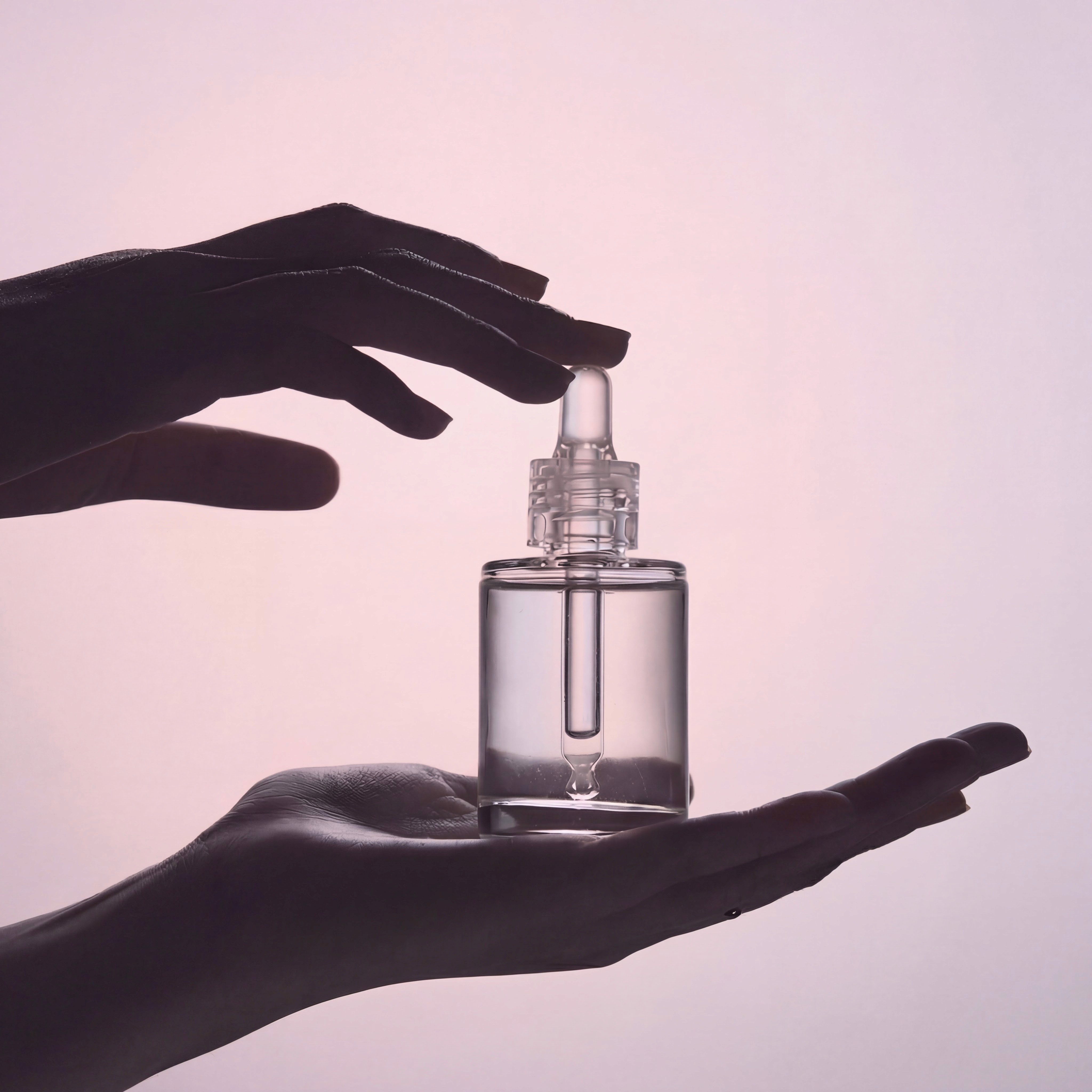
A booster is a product designed to enhance the routine around it rather than to be the routine. Two common types illustrate the logic. A spicule booster uses microscopic structures to prepare the skin surface so that the following product is taken up more readily, an approach related to the wider sponge spicules category. A PDRN primer adds a regenerative-themed layer that sits ahead of an existing serum.
The shared idea is leverage. A booster increases the perceived and actual value of products the customer already owns, which makes it an attractive addition rather than a substitute. For the brand, that means a booster is a natural cross-sell: it does not cannibalise an existing step, it amplifies it. The strategic value is the routine it completes, not the product in isolation.
Wer den Weg von der Idee bis zur fertigen Charge plant, findet die Übersicht unter Kosmetik entwickeln lassen.
What a booster actually does in a routine
A booster is a product designed to enhance the routine around it rather than to be the routine. Two common types illustrate the logic. A spicule booster uses microscopic structures to prepare the skin surface so that the following product is taken up more readily, an approach related to the wider sponge spicules category. A PDRN primer adds a regenerative-themed layer that sits ahead of an existing serum.
The shared idea is leverage. A booster increases the perceived and actual value of products the customer already owns, which makes it an attractive addition rather than a substitute. For the brand, that means a booster is a natural cross-sell: it does not cannibalise an existing step, it amplifies it. The strategic value is the routine it completes, not the product in isolation.
Wer den Weg von der Idee bis zur fertigen Charge plant, findet die Übersicht unter Kosmetik entwickeln lassen.
The demand signal, framed as a market opportunity
The signals here are best read as direction rather than guarantees:
Routine-building behaviour: consumers increasingly assemble multi-step routines, which makes a product that enhances the whole routine more attractive than another competing step.
Cross-sell logic: a booster attaches to an existing purchase, which supports cross-selling and a higher average order value without asking the customer to replace a product.
Performance interest: demand for experienceable performance favours products that make a routine feel more effective, provided claims stay measured.
Layering culture: the established culture of layering products gives boosters a natural place in the routine.
The opportunity is a booster system that completes and extends a routine, not a standalone novelty.
The formulation reality: a booster is only as good as its delivery
A booster works when the formulation genuinely supports the role it claims. Effects are formulation-dependent on the active, its form, the delivery system and how it interacts with the products around it. A booster that does not measurably change the routine is just another serum.
Mechanism clarity: a spicule booster relies on the structure and integrity of the spicules and the surrounding formulation, while a primer relies on what it delivers and how it sits under the next product.
Delivery and compatibility: a booster has to be compatible with the products layered over it, so texture, absorption and interaction matter as much as the active.
Concentration and tolerance: a booster used ahead of an active routine must be tolerable in combination, not only on its own.
Sensory signal: an experienceable feel supports the perception that the routine is working, provided the claim stays close to what the formulation supports.
Because the effect depends on the formulation and the interaction with the rest of the routine, the early decisions matter more than the headline active. This is exactly where a real formulation base, rather than development into the unknown, changes the economics of the project.
Positioning a booster so it sells the routine
The strategic value of a booster is that it sells the routine, not just itself. Three positioning choices tend to hold up:
Aspect | Standalone product | Booster product |
|---|---|---|
Role | Replaces or adds a step | Enhances existing steps |
Purchase logic | Competes with other products | Attaches to current routine |
Commercial effect | Single sale | Cross-sell, higher order value |
Claim focus | Its own result | How it supports the routine |
The positioning should make the routine logic explicit: this is the product that makes your existing routine work harder. Claims should stay close to what the formulation supports and describe the booster's role rather than over-promise a standalone result. Measured claims protect the brand and fit the regulatory limits on cosmetic claims.
How Labtree helps brands build a booster system
The challenge with a booster is that it has to perform in combination with other products, not in isolation, which makes development into the unknown especially uncertain. Developing from a real base is faster and more predictable.
At Labtree, development starts from a real formulation base rather than from an empty page. Pre-qualified booster and primer bases give a brand early clarity on which booster concept is actually producible, in which delivery system and with what compatibility profile. Physical samples of pre-qualified formulations ship within 24 hours from the sample warehouse, free of charge for standard samples, so the booster can be assessed in combination with the products it is meant to enhance, on real skin rather than in theory. That early physical evidence is especially valuable for a booster, where the interaction with other products is the whole point. Because development happens in our own lab, the booster and its delivery can be specifically developed, tested and adapted, and smaller test batches can be produced in-house to validate the product early under real conditions.
The 5-phase process applied to a booster product
Conception: defining the booster type, the routine it is meant to enhance and the price point, and matching them to a suitable base from the Labtree pool.
Sampling: standard samples of pre-qualified formulations within 24 hours for a first read on texture, feel and compatibility with the products it sits alongside.
Individualisation: adjusting the active, delivery system and sensory profile, iterating with further samples until the booster works in combination, not only on its own.
Prototyping: a production-near test batch, with packaging, design, regulatory requirements and production capability considered early and in parallel with formulation development, rather than addressed only after final formulation approval.
Production: scaling to the initial batch and into routine production, coordinated because production capability was considered during prototyping.
Booster and primer bases: are there pre-qualified booster and primer bases to start from, so the concept is not built from scratch?
Delivery competence: can the partner work on the delivery system, since a booster is only as good as how it prepares or delivers?
Own laboratory: can the active, delivery and compatibility be adjusted in-house rather than commissioned externally?
Sampling speed: samples within 24 hours, with free standard shipping, so the booster can be assessed in combination quickly.
Claim support: a partner who keeps claims close to the booster's role rather than over-promising a standalone result.
Booster systems are a quietly strategic category. Instead of competing for the next step, they attach to a routine a customer already owns and aim to make it work harder, which supports cross-selling and a higher average order value. The products succeed when the formulation and delivery genuinely change the routine, not just the label. With pre-qualified booster bases, early physical samples assessed in combination, and parallel handling of packaging and regulatory work, a credible booster system is a structured, plannable project rather than a leap into the unknown.
Weitere nützliche Links
FAQ
Does Labtree have its own laboratory?
Yes. Labtree has its own development competence including a laboratory. This means formulations are not only selected but specifically developed, tested and adapted. In addition, smaller test batches can be produced in-house to validate products early under real conditions and move them safely into production.
What is a skincare booster?
A booster is a product designed to enhance an existing routine rather than replace a step, for example a spicule booster that prepares the skin or a PDRN primer that adds a layer ahead of a serum. Its value is in the routine it completes, and the effect is formulation-dependent on the active and the delivery.
Why are boosters useful commercially?
Because a booster attaches to products a customer already uses rather than competing with them, it supports cross-selling and a higher average order value. It adds to the routine instead of asking the customer to replace a product, which is why it is a strategic lever for routine-building.
How do you make sure a booster actually works in a routine?
By assessing it in combination with the products it is meant to enhance, not in isolation. The delivery system and the compatibility with the layered products matter as much as the active. Early physical samples assessed together, on real skin, are the practical way to validate this, since the interaction is the whole point.
How long does it take to develop a booster product?
With a pre-qualified booster or primer base as a starting point, a white-label route is typically 2 to 3 months. An individual new development is usually 3 to 6 months, depending on stability testing, compatibility iteration and regulatory preparation.
Can Labtree work on the delivery system, not just the active?
Yes. Because development happens in our own lab from a real formulation base, the delivery system and the booster's interaction with the rest of the routine can be specifically developed, tested and adapted, and validated through early physical samples assessed in combination with the products it is meant to enhance.