The topic is short and compact
Skinification extends an established skincare active ingredient into makeup, hair and scalp, body, and oral care, but requires its own formulation in each category.
According to SCCS default values, the daily amount of body lotion used is 7.82 g, which is about five times higher than that of a face cream; the permissible concentration may therefore decrease.
For shampoo, the SCCS calculates a retention factor of 0.01, which is why active ingredients for the scalp belong more in leave-on formats such as serums or tonics.
According to the EU guidance on borderline products, claims such as "promotes hair growth" or the prevention of oral cavity inflammation generally fall outside the scope of cosmetics.
Data on the active ingredient from facial care does not support any claim for the new product: according to Regulation (EU) No 655/2013, each end product requires its own evidence.
So läuft die Entwicklung bei Labtree
1
Konzeptionierung
2
Bemusterung – Standardmuster in 24 h
3
Individualisierung
4
Prototyping
5
Produktion
White Label 2–3 Monate · Private Label 3–6 Monate · Produktion ab 1.000 Stück
What does skinification mean for product development?
Skinification describes the phenomenon where products outside of facial care are expected to meet the same standards as a serum: named active ingredients, a comprehensible mode of action, and good skin compatibility. In product development, this is reflected in four directions:
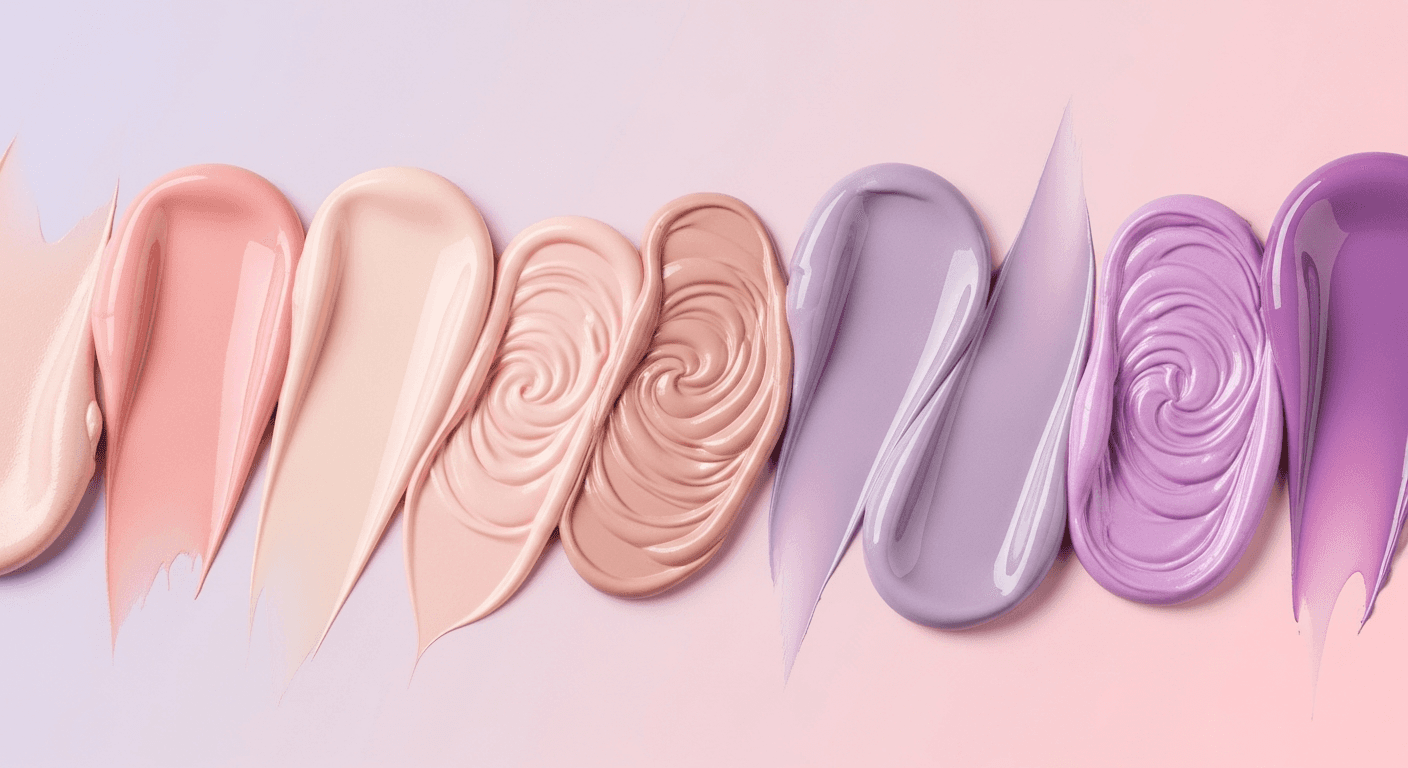
Make-up: Skin tints, concealers, and lip products with nourishing active ingredients—hybrid products bridging skincare and make-up.
Hair and scalp: Scalp serums, tonics, and shampoos formulated with active ingredients from facial care.
Body: Lotions and body serums with active ingredients that were previously reserved for facial products.
Oral care: Toothpastes, mouthwashes, and dental gels positioned with nourishing active ingredients.
Legally, all four directions remain within the same framework. Regulation (EC) No 1223/2009 defines a cosmetic product in Art. 2(1)(a) as any substance or mixture intended to be placed in contact with the external parts of the human body (epidermis, hair system, nails, lips and external genital organs) or with the teeth and the mucous membranes of the oral cavity with a view exclusively or mainly to cleaning them, perfuming them, changing their appearance, protecting them, keeping them in good condition or correcting body odours. A scalp serum and a mouthwash are therefore just as much cosmetics as a face cream, as long as the purpose remains cosmetic.
The commercial core is the extension of an existing asset. Whoever has already established an active ingredient in facial care does not need to explain it anew in a new category. Instead, the effort shifts from brand communication to formulation development, because each category requires its own base and its own evidence.
Why can an active ingredient not simply be transferred to another category?
Because exposure changes with the category, and exposure determines the safety assessment. Annex I Part A No. 6 of Regulation (EC) No 1223/2009 requires data on the site and surface area of application, the amount applied, the duration and frequency of use, the foreseeable exposure routes, and the target populations. The default values for this can be found in the Notes of Guidance of the SCCS (12th Revision), Table 3A:
Product type | Daily amount | Retention factor | Calculated daily exposure |
|---|---|---|---|
Face cream | 1.54 g | 1.0 | 1.54 g |
Body lotion | 7.82 g | 1.0 | 7.82 g |
Shampoo | 10.46 g | 0.01 | 0.11 g |
Lipstick, lip care | 0.057 g | 1.0 | 0.057 g |
Toothpaste (adults) | 2.75 g | 0.05 | 0.138 g |
Mouthwash | 21.62 g | 0.10 | 2.16 g |
This results in three consequences for the formulation. First: According to these values, about five times as much product is applied from a body lotion as from a face cream, spread over an application area of 15,670 instead of 565 cm² (Table 4 of the Notes of Guidance). A concentration assessed as safe in a facial serum may be too high in body care. Regulation (EU) 2024/996 illustrates this using the example of vitamin A: a maximum of 0.05 percent retinol equivalent in body lotions, 0.3 percent in other leave-on and rinse-off products.
Second: For shampoo, the SCCS assumes a retention factor of 0.01 because the product is diluted and rinsed off. An active ingredient intended to act on the scalp therefore rather belongs in a leave-on format such as a scalp serum or tonic. Third: For oral care and lip products, ingestion counts. The SCCS applies oral retention factors for toothpaste and mouthwash, meaning the safety assessment considers oral ingestion in addition to the skin.
Which formulation problems arise in the individual categories?
Makeup
In skin tints and concealers, the active ingredient shares the formulation with a high pigment load of iron oxides and titanium dioxide. active ingredients and their solvents can alter pigment dispersion, viscosity, and color shade; therefore, it is advisable to test every shade in a range for color stability, not just the base shade. With stick formats such as lipsticks and blush sticks, the pouring temperature also comes into play: hot-pour masses are filled in a molten state, and a temperature-sensitive active ingredient must withstand this temperature throughout the entire pouring and filling process.
Hair and Scalp
The scalp is covered with hair. A rich oil phase, such as one a facial serum might carry, weighs down the hair and makes it look greasy. Scalp serums are therefore usually formulated as aqueous or hydroalcoholic solutions with a dropper or applicator tip that dry quickly and leave no residue. Ethanol improves drying behavior, but can alter the solubility of an active ingredient and reduce skin compatibility; clarity and solubility are therefore tested over the storage period. In shampoo, the active ingredient must also be compatible with the surfactant system. How to formulate for the scalp as an extension of facial skin is described in the article on Scalp Care and Microbiome.
Body
Body care is sold in larger volumes; bottles with pump dispensers and tubes are typical instead of small airless dispensers. The formulation must spread well over large areas and absorb quickly. The cost driver is the proportion of active ingredient per kilogram of bulk product: at the same concentration, a 200 ml lotion contains almost seven times as much active ingredient as a 30 ml serum. In addition, the higher exposure level can limit the permissible concentration.
Oral Care
Toothpastes and mouthwashes pose demands on taste, foaming behavior, and mucosal compatibility that play no role in skincare. A bitter or metallic inherent taste of the active ingredient must be balanced using flavoring and sweeteners. Some substances are subject to specific limit values for oral care products: according to Annex III No. 12 of Regulation (EC) No. 1223/2009 as amended by Regulation (EU) No. 344/2013, hydrogen peroxide present or released in oral products, including mouthwash and toothpaste, may not exceed 0.1 percent; tooth whitening or bleaching products containing more than 0.1 and up to 6 percent may only be sold to dental practitioners and not be used on persons under 18 years of age. Regulatory requirements, preservation, and minimum quantities in this category are discussed in the article on Intimate and Oral Care.
What does this mean for PDRN, peptides, and other hero active ingredients?
For many hero active ingredients, the data available from facial skincare is already limited, and it does not automatically transfer to a new category. PDRN clearly demonstrates this. According to Park and colleagues (2025), PDRN consists of polynucleotide fragments of about 50 to 1,500 kDa, whereas passive permeation through the skin is generally limited to molecules under 500 Da. The negative charge further impedes absorption. The authors therefore describe unmodified PDRN as a suboptimal cosmetic active ingredient; their results on plasma-treated PDRN stem from in vitro tests.
Clinical evidence also predominantly originates from other applications. A systematic review of randomized trials by Alhussain and colleagues (2026) found seven studies with a total of 183 participants. The skin rejuvenation studies combined polynucleotides or PDRN with microneedling, radiofrequency, or injection, with the most consistent effects observed in wound healing. None of the studies evaluated a cosmetic hair, body, or oral care product.
For category expansion, this means: the positioning "with PDRN" can be transferred, but the efficacy claim cannot. The same evaluation applies to peptides and other large or sensitive molecules: molecular size, solubility in the new base, pH range, and stability over shelf life are re-evaluated for each formulation. How PDRN, peptides, and niacinamide can be formulated and scaled is described in the article on trending active ingredients.
Where is the borderline to medicinal products drawn?
The boundary runs along purpose and mode of action, and it is drawn more narrowly in hair and oral care than in facial skin care. The Manual of the Working Group on Cosmetic Products on Borderline Products (Version 5.5, June 2025) classifies two cases typical of skinification:
Hair growth and hair loss: Whether a product affects physiological functions through a pharmacological, immunological, or metabolic action is decided on a case-by-case basis. According to the manual, the claim “promotes hair growth” generally applies to medicinal products, such as those with minoxidil, which is banned as a cosmetic ingredient. “Reduces hair loss” generally applies to cosmetic products.
Mouthwashes and dental gels: These can be cosmetic if their primary purpose is cosmetic; secondary antimicrobial claims are then possible. Products presented for the treatment or prevention of infections, inflammations, or other diseases of the oral cavity are not considered cosmetics.
The manual also states: The fact that a substance is also used as an active ingredient in medicinal products is not decisive, but it can be an indication of a pharmacological action. For an active ingredient originating from aesthetic medicine like PDRN, presentation, concentration, and claims should therefore be coordinated with particular care. The manual is not legally binding; the responsible national authorities decide on the classification on a case-by-case basis.
Which advertising claims does the new category feature?
Only those that are substantiated on the new finished product. The Regulation (EU) No. 655/2013 establishes six common criteria for advertising claims in its annex. Truthfulness is central to skinification: if a specific ingredient is claimed, it must be purposefully present, and claims about the properties of an ingredient must not imply that the finished product has the same properties if this is not the case. Under the criterion of evidential support, every claim requires adequate and verifiable evidence.
In practice, this means:
A study on a facial serum does not substantiate a claim for a scalp serum, because the formulation, application method, and skin area are different.
Claims such as "nourishes the scalp" or "moisturizes" require measurements on the finished product, such as corneometry or consumer use tests with study participants.
If the active ingredient is only used in a small amount, communication must not suggest an effect that this concentration does not substantiate; under the criterion of fairness, presentations of efficacy must not go beyond the existing evidence.
The article on Cosmetic advertising claims in the EU provides a detailed overview of the six criteria and typical supporting evidence.
With one category after another and a test plan for each product. The obvious choice is the category that is technically closest to the existing facial care: a body serum or a leave-on scalp treatment shares more formulation logic with the facial serum than toothpaste does. Each expansion is a cosmetic product in its own right with its own scope of testing:
Compatibility: test the active ingredient in the new base for solubility, pH range, and interactions with surfactants, pigments, or flavorings.
Stability: accelerated storage at elevated temperature and storage in the final primary packaging, because pump dispensers, tubes, and tonic bottles have different materials and headspaces than a serum dispenser.
Preservation: preservation challenge test according to ISO 11930 for water-containing formulations; for oral care, with a preservative system suited to taste and oral exposure.
Safety assessment: a new safety report with the exposure data of the category.
Evidence and notification: user trials for marketing claims, a product information file, and a dedicated CPNP notification.
Labtree is a B2B cosmetics developer and manufacturer with its own laboratory and production facilities in Germany, covering make-up and skin care as well as selected hair care formats. The process follows the stages of conceptualization, sampling, customization, prototyping, and production; manufacturability is already verified during formulation development. Samples of pre-qualified formulations are usually dispatched from the sample warehouse within 24 hours, allowing the texture and sensory profile of the new category to be evaluated early on using real samples. Under white label, a tested Labtree formulation is adapted and typically ready for delivery in 2 to 3 months with standard packaging; under private label, the formulation is newly developed, usually taking 3 to 6 months to market readiness. The minimum order quantity is generally 1,500 units per product, depending on product type, fill size, and packaging; for a line spanning multiple categories, it applies to each product individually. The detailed process is described on the page Having cosmetics developed.
Quellen
More useful links
FAQ
What is skinification?
Skinification refers to the transfer of skincare active ingredients and skincare logic into other categories such as makeup, hair and scalp care, body care, and oral care. For brands, it is a way to extend a familiar active ingredient into new products. Technically, each category requires its own formulation and its own evidence.
What does Hero Skincare mean?
Hero skincare refers to the product or active ingredient for which a brand is primarily known, such as a serum with a specific peptide. Skinification builds on precisely this: The hero active ingredient is extended into further categories. The brand awareness carries over, but proof of efficacy must be provided anew for each new product.
Can a scalp serum advertise reducing hair loss?
According to the EU manual on borderline products, the claim "reduces hair loss" generally pertains to cosmetic products, whereas "promotes hair growth" typically refers to medicinal products. The classification is determined on a case-by-case basis and also depends on concentration, mode of action, and presentation. Furthermore, every claim must be supported by evidence on the finished product.
Can PDRN be used in shampoo or toothpaste?
Whether a specific PDRN raw material can be used in a product is determined by the safety assessment based on the exposure data for the respective category—including oral intake in the case of toothpaste. According to SCCS standard values, only a small portion of the product remains on the skin and hair from shampoo. In any case, any efficacy claim requires supporting evidence on the finished product.
Do I need a separate safety assessment for each category?
Yes. Each product is a distinct cosmetic product with its own safety report, its own product information file, and its own CPNP notification, because application amounts, application areas, and exposure routes differ. The scope of testing is described in the magazine article “Stability and Safety Testing for Cosmetics”.
Which category is best suited as a first extension?
Technically, the easiest approach is usually a leave-on format similar to existing facial skincare products, such as a body serum or scalp serum. Brands with a makeup line can also incorporate an active skincare ingredient into a skin tint or lip product. Oral care requires the most testing, as it introduces factors like taste, mucosal compatibility, and ingestion.
How long does a category extension take?
The duration primarily depends on whether a tested formulation is adapted for the new category (white label) or the formulation is developed from scratch (private label); a new development usually takes significantly longer. Next, stability testing in the final packaging, application tests for advertising claims, and packaging availability have the greatest influence. Oral care further expands the scope of testing because oral exposure and taste are evaluated.